
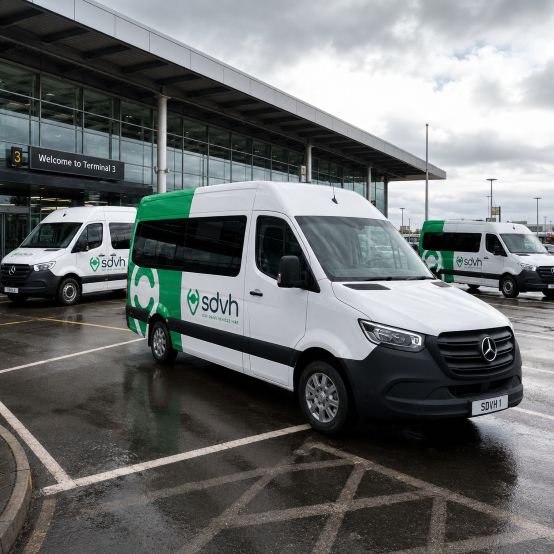









Planning seats, bags and drivers for a group
Give the confirmed passenger number rather than a best guess. List luggage, sports kit or equipment separately, because a full seat count can leave little room for bags. Agree one clear meeting point for the group before travel. Share the intended driver's age and licence details when you enquire, so the team can check eligibility for the size of minibus before quoting.
Picking a suitable minibus
Base your choice on how many passengers are travelling, the luggage and who is eligible to drive. Smaller groups may be well served by a 7 or 9-seater, whereas 12, 15 and 17-seat vehicles call for closer checks on licence, age and luggage space. The range includes the Vauxhall Zafira 5 + 2, Galaxy 7 Seater Manual, Galaxy 7 Seater Automatic, 9 Seater Manual and 9 Seater Automatic, depending on dates, driver details and availability. Make, model, transmission, seating, payload and licence position are all confirmed when you are quoted, so treat the vehicles listed as a guide to the kind of hire on offer, not a guaranteed reservation of a particular model.
Agreeing a Group Meeting Point Early
Where should everyone gather on the day? Settling this early saves a flurry of messages later. Choose a point with room for the whole group to wait, confirm it with whoever knows the venue, and share the address plus a postcode in a group message. If passengers are coming from different directions, note who needs collecting en route and agree a cut-off time after which the minibus leaves without stragglers. Collect a mobile number for each passenger, or at least for one contact per family, so everyone can be reached if plans slip. When you enquire, tell the team the pickup point, the headcount and the date, and ask any question you have about delivery of the vehicle to that location before the booking is confirmed.
Keeping a Shared Group Itinerary
A shared itinerary keeps a group trip from fragmenting. Put the day's timings in one document: departure, any stops already agreed, the event or venue time, and the expected return. Give each passenger access to it, whether through a group chat or a printed copy, and name one person as the point of contact for changes. If the schedule includes a window for food or an optional activity, mark it clearly as flexible so nobody treats it as fixed. Luggage and equipment can be listed in the same document, which helps when the team asks about storage needs at the quoting stage. Where the return time might drift, note the latest departure that still works, and confirm the final version with everyone a day or two before travel.
Explore other minibus hire areas
Last checks before booking
Ahead of confirming the hire, go over the key points: whether the vehicle is available, what the driver needs, mileage, insurance, delivery or collection arrangements and any extras you have asked for. The number of passengers, luggage, driver age, licence entitlement and any D1 requirement should all be checked before the minibus is confirmed. A clear enquiry gives the date, length of hire, rough route, delivery or pickup address, expected passengers or load, and any special requirements that might affect whether a vehicle is suitable.