









Planning seats, bags and drivers for a group
Give the confirmed passenger number rather than a best guess. List luggage, sports kit or equipment separately, because a full seat count can leave little room for bags. Agree one clear meeting point for the group before travel. Share the intended driver's age and licence details when you enquire, so the team can check eligibility for the size of minibus before quoting.
Picking a suitable minibus
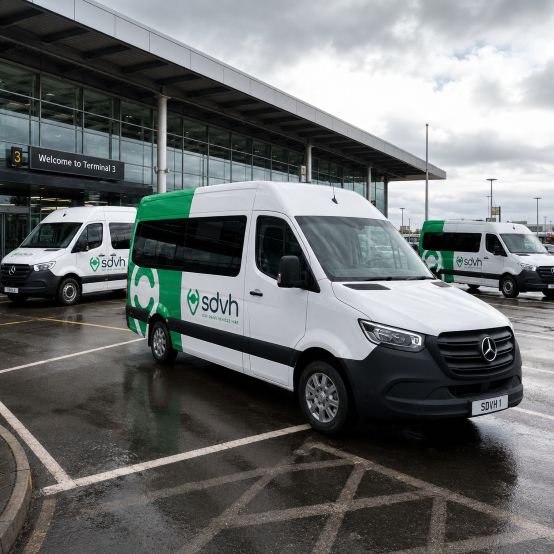
Base your choice on how many passengers are travelling, the luggage and who is eligible to drive. Smaller groups may be well served by a 7 or 9-seater, whereas 12, 15 and 17-seat vehicles call for closer checks on licence, age and luggage space. The range includes the Vauxhall Zafira 5 + 2, Galaxy 7 Seater Manual, Galaxy 7 Seater Automatic, 9 Seater Manual and 9 Seater Automatic, depending on dates, driver details and availability. Make, model, transmission, seating, payload and licence position are all confirmed when you are quoted, so treat the vehicles listed as a guide to the kind of hire on offer, not a guaranteed reservation of a particular model.
Avoiding Last-Minute Luggage Surprises
How much room will the group's bags actually take up? Asking this a week ahead is far easier than discovering the answer on the morning. Request a luggage count from every passenger, broken down by bag type, and ask for anything oversized to be flagged separately, such as skis, instrument cases or large holdalls. Note whether each person's bags are soft or rigid, since the shape affects how the total volume translates into vehicle space. If the numbers come back higher than expected, contact the team before the date to discuss whether a different seat count leaves room for the luggage as well as the passengers. Recording the running total in a shared list means late additions are visible to everyone, and you can ask any latecomers to trim their packing if the count creeps towards the limit you first quoted.
Keeping a Shared Itinerary
Where does everyone need to be, and at what time? A shared itinerary answers this in one place. Build a simple schedule listing each pickup point with its address and the time the vehicle should arrive, then add the destination details and any contact name there, such as a venue coordinator or team manager. Note the planned return time and any intermediate stops, including meal breaks or a scheduled pause partway through the day. Ask each passenger to confirm their pickup slot individually rather than assuming silence means agreement, and record a phone number for every stop in case timings slip. If the day involves several separate groups meeting at different times, label each block clearly. Circulating the finished version to everyone, including the team handling your enquiry, keeps the whole arrangement aligned and highlights any conflicts while there is still time to resolve them.
Explore other minibus hire areas
Last checks before booking
Ahead of confirming the hire, go over the key points: whether the vehicle is available, what the driver needs, mileage, insurance, delivery or collection arrangements and any extras you have asked for. The number of passengers, luggage, driver age, licence entitlement and any D1 requirement should all be checked before the minibus is confirmed. A clear enquiry gives the date, length of hire, rough route, delivery or pickup address, expected passengers or load, and any special requirements that might affect whether a vehicle is suitable.